










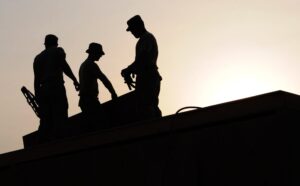
 Roofing is one of the most dangerous jobs in the construction industry. Every year, thousands of roofers are injured or killed on the job. Whether working on residential homes or large commercial structures, roofers face a high risk of injury, particularly if there are safety issues at the worksite or if they are not properly equipped with protective tools and gear. Here are some of the common types of accident and injury risks faced by roofers.
Falls from Heights
Falls are the leading cause of injuries and fatalities among roofers. Whether it’s slipping off a steep slope, tripping over materials or falling off a ladder, falls can result in broken bones, spinal injuries, traumatic brain injuries or death. According to data from the Occupational Safety and Health Administration (OSHA), falls account for nearly 75% of fatalities in the roofing industry. Several factors contribute to this risk including, but not limited to:
- Inadequate fall protection equipment
- Unstable or slippery roof surfaces
- Poor weather conditions, such as rain, wind, or ice
- Improper ladder placement
Prevention strategies include using personal fall arrest systems (harnesses, anchors, lifelines), guardrails, proper ladder safety practices, and thorough training in hazard recognition.
Slips-and-fall and Trip-and-fall Accidents
Roofing surfaces are often uneven, angled, and cluttered with tools and materials. Loose shingles, tarps, debris or water can all contribute to slips and trips. Even minor missteps can result in serious falls or sprains. Common injuries include sprained ankles, knee injuries, wrist fractures and bruises. While not always fatal, these injuries can sideline workers for weeks and lead to long-term joint problems. But such accidents could also result in catastrophic injuries or fatalities depending on the nature and circumstances.
Electrocution and Electrical Injuries
Many roofing jobs are performed near power lines, antennas, or electrical systems in homes or buildings. Contact with live wires can lead to serious electrical burns, cardiac arrest, or death.
Risk factors for electrocution include:
- Carrying long metal tools or ladders near power lines
- Accidental contact with hidden electrical wires under the roof
- Failure to de-energize systems during installation or repair
To prevent electrical injuries, roofers must be trained in electrical hazard awareness, and all nearby utilities should be identified and deactivated. The Occupational Safety and Health Administration (OSHA) requires that roofers maintain a minimum clearance from overhead power lines and use non-conductive tools when working near them.
Tool and Equipment-Related Accidents
Roofers often use a variety of power tools including nail guns, saws, drills, and compressors. Improper use or mechanical failure can result in serious injuries.
Common accidents include:
- Nail gun misfires causing puncture wounds or impalement
- Kickbacks from power saws
- Compressed air or hose accidents
- Improper handling of propane torches
To mitigate these hazards, roofers must be trained in tool safety protocols and be provided personal protective equipment (PPE) at all times.
Contacting an Experienced Lawyer
Many construction workers in New York City such as roofers, ironworkers, steelworkers, carpenters, masons, bricklayers, painters, window washers, and electricians etc. tend to work from an elevation by using scaffolds, platforms, ladders etc.
Workers injured in roofing accidents and other construction accidents can bring civil actions against the construction company, contractor and property owner/manager, etc. responsible for the safety of the jobsite. Construction accident injuries can be debilitating and sometimes, even catastrophic or fatal. A construction accident victim can seek workers’ compensation benefits from his or her employer. In addition, workers and their families may be able to file a third-party lawsuit for substantial money damages against a number of parties, and thus have two sources of compensation.
Third-party claims are filed against parties other than the employer or co-employees and may include general contractors, sub-contractors, building owners, managing agents, construction companies, etc. In cases where a worker dies from injuries suffered on the job, surviving family members may seek death benefits through workers’ compensation and/or file a wrongful death claim against a third party.
If you have suffered injuries in a construction-related accident, the experienced New York personal injury attorneys at the Law Offices of Kenneth A. Wilhelm can help you better understand your legal rights and options, and also fight hard to recover just compensation for you.
Our law firm recovered $3,375,576 for a construction worker (an undocumented immigrant) who was injured on the job — one of the highest construction case settlements in New York that year. Our law firm also recovered $3,000,000 for a man who fell and suffered two broken legs when he walked into an open elevator shaft. Also, one of our clients obtained a verdict for $43,940,000 and another of our clients got a verdict for $23,500,000, both in medical malpractice cases.
Please contact us TOLL FREE 24 hours a day, 7 days a week at 1-800-WORK-4-YOU (1-800-967-5496). WE CAN EVEN COME TO YOU. There is no attorneys’ fee unless we recover money for you. We can also help with personal injury, lead poisoning and medical malpractice cases including, brachial plexus palsy (Erb’s palsy) and cerebral palsy cases in New York, New Jersey, Connecticut, Pennsylvania, or Florida. If you have been seriously injured in any of the 50 U.S. states, please call us and we will try to help you with your case.
Other TOLL FREE phone numbers for us are:
1-800-RADIO-LAW, 1-888-WYPADEK, OR 1-800-LAS-LEYES
Please visit us at: www.WORK4YOULAW.com