












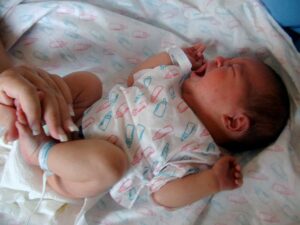
Cerebral palsy is a group of permanent movement and posture disorders that occur in the developing fetal or infant brain. This is a condition often caused by injuries stemming from medical negligence (carelessness) during labor and/or delivery of the baby. Diagnosing of cerebral palsy, especially one resulting from a birth injury, requires a comprehensive assessment involving medical history, neurological and physical examinations, imaging studies and developmental evaluations. Because the symptoms can evolve over time and may resemble other developmental disorders, diagnosis is a careful, multi-step process that integrates clinical findings with diagnostic testing.
Understanding Cerebral Palsy and Birth Injuries
Birth injury-related cerebral palsy occurs when the brain is damaged due to events that happen during labor, delivery or immediately afterward. Common causes include oxygen deprivation (hypoxia or asphyxia), traumatic delivery, intracranial bleeding or infection. These events can lead to damage in motor control areas of the brain, such as the cerebellum.
Early identification of cerebral palsy due to a birth injury is critical for initiating therapies and interventions that improve long-term outcomes. However, cerebral palsy may not be immediately apparent at birth. Many children receive a definitive diagnosis between 12 and 24 months of age, once developmental delays become more evident.
Initial Clinical Evaluation and Medical History
The diagnostic process begins with a comprehensive medical history. Physicians review the mother’s pregnancy, labor and delivery records to identify potential risk factors or complications that could have caused brain injury. These may include:
- Premature birth or low birth weight
- Prolonged or difficult labor
- Umbilical cord problems (such as cord prolapse or compression)
- Placental abruption or uterine rupture
- Maternal infections
- Fetal distress or abnormal heart rate patterns
- Need for emergency resuscitation after birth
This detailed history helps clinicians determine whether the cerebral palsy may be related to perinatal events and directs further investigation. Parents are also asked about the child’s early behaviors, feeding difficulties, muscle tone and achievement of developmental milestones (e.g., rolling, sitting, crawling, etc.). Delays or abnormalities in these milestones often provide the first clues that something may be wrong with motor development.
Physical and Neurological Examination
A neurological and physical examination is essential in diagnosing cerebral palsy. Physicians look for characteristic signs, such as:
• Abnormal muscle tone such as stiffness or floppiness
• Spasticity (muscle tightness or exaggerated reflexes)
• Abnormal postures or movement patterns
• Poor coordination or balance
The pattern of motor dysfunction helps doctors classify the type of cerebral palsy such as spastic, dyskinetic, ataxic or mixed. For example, spastic cerebral palsy, the most common type, results from damage to the motor cortex or pyramidal tracts and is characterized by stiff, jerky movements. In contrast, dyskinetic cerebral palsy results from basal ganglia damage, leading to involuntary, writhing movements.
Physicians may use standardized tools to assess motor function, such as the Hammersmith Infant Neurological Examination (HINE) or General Movements Assessment (GMA). The GMA, in particular, can detect abnormal spontaneous movements in infants as early as two to three months old, making it useful for early detection of cerebral palsy risk.
Neuroimaging and Lab Testing
Imaging studies play a key role in confirming and understanding the cause of cerebral palsy. Magnetic Resonance Imaging (MRI) is the preferred method because it provides detailed images of brain structures and can reveal areas of hypoxic-ischemic injury, malformation or hemorrhage. MRI can help determine whether the damage occurred during pregnancy, at birth or after birth.
In cases where MRI is not available, cranial ultrasound may be performed, especially for premature infants in the neonatal intensive care unit (NICU). Computed tomography (CT) scans are sometimes used, though they expose the child to radiation and offer less detailed images than MRI.
Laboratory tests may also be performed to rule out other potential causes of motor impairment. For example, metabolic or genetic disorders can mimic cerebral palsy symptoms. Blood tests, genetic panels and metabolic screenings help confirm that the motor impairment is not due to progressive or inherited conditions.
Developmental and Functional Assessments
Cerebral palsy is not only a motor disorder but can also affect other aspects of development, including cognition, speech, and sensory processing. Therefore, developmental assessments are an essential part of diagnosis. Pediatric neurologists, developmental specialists and therapists evaluate how the child interacts, learns, and communicates. Tools such as the Bayley Scales of Infant and Toddler Development or Gross Motor Function Classification System (GMFCS) are used to measure functional ability and track progress over time. These assessments help tailor therapy and rehabilitation programs to the child’s individual needs.
Early and accurate diagnosis of cerebral palsy birth injury allows for immediate initiation of interventions such as physical therapy, occupational therapy and speech therapy. These early measures significantly enhance a child’s ability to achieve functional independence and improve quality of life. Additionally, identifying the cause of cerebral palsy can help families understand whether the injury was preventable when seeking medical or legal recourse.
Contacting an Experienced Birth Injury Lawyer
As New York personal injury lawyers, we have seen instances of cerebral palsy that occur due to medical negligence (carelessness) during labor and delivery, and also at New York City Health and Hospital Corporation facilities. It is the responsibility of medical professionals to monitor the condition of the fetus and the mother and make decisions that reduce or eliminate a risky delivery. If your child has cerebral palsy, he or she may be able to receive compensation that helps pay for medical expenses, lost income, cost of therapy, future treatments, permanent injuries, disabilities, past and future pain and suffering, etc.
The experienced New York personal injury attorneys at the Law Offices of Kenneth A. Wilhelm can help you better understand your legal rights and options, and also fight hard to recover just compensation for you. One of our clients obtained a verdict for $43,940,000 and another of our clients got a verdict for $23,500,000, both in medical malpractice cases. It is in the best interest of injured victims and their families in such cases to contact an experienced personal injury lawyer before contacting the people responsible for the injuries, and definitely before contacting or communicating with any insurance company.
The following list identifies some of these hospitals (operated by New York City Health and Hospital Corporation):
- Jacobi Hospital aka Bronx Municipal 1400 Pelham Parkway South Bronx, New York 10461 718-918-5000
- Lincoln Hospital 234 East 149th Street Bronx, New York 10451 718-579-5000
- North Central Bronx Hospital 3424 Kossuth Avenue Bronx, New York 10467 718-519-5000
- Coney Island Hospital 2601 Ocean Parkway Brooklyn, New York 11235 718-616-3000
- Kings County Hospital 451 Clarkson Avenue Brooklyn, New York 11203 718-245-3131
- Woodhull Hospital 760 Broadway Brooklyn, New York 11206 718-963-8000
- Bellevue Hospital 462 First Avenue New York, New York 10016 212-562-5555
- Harlem Hospital 506 Lenox Avenue New York, New York 10037 212-939-1000
- Metropolitan Hospital 1901 First Avenue New York, New York 10029 212-423-6262
- Elmhurst Hospital 79-01 Broadway Elmhurst, New York 11373 718-334-4000
- Queens Hospital Center 82-68 164th Street Jamaica, New York 11432 718-883-3000
Please contact us TOLL FREE 24 hours a day, 7 days a week at 1-800-WORK-4-YOU (1-800-967-5496). WE CAN EVEN COME TO YOU. There is no attorneys‘ fee unless we recover money for you. We can also help with personal injury, lead poisoning and medical malpractice cases including, brachial plexus palsy (Erb’s palsy) and cerebral palsy cases in New York, New Jersey, Connecticut, Pennsylvania, or Florida. If you have been seriously injured in any of the 50 U.S. states, please call us and we will try to help you with your case.
Other TOLL FREE phone numbers for us are:
1-800-RADIO-LAW, 1-888-WYPADEK, OR 1-800-LAS-LEYES
Please visit us at: www.WORK4YOULAW.com