








Falling objects pose a multifaceted risk within construction zones, jeopardizing the safety of both workers and pedestrians. The urban landscape of New York City increases these dangers due to its dense population and vertical construction projects. A variety of potential hazards exist at worksites, including those from falling tools, materials, debris, and equipment that can result in significant injuries to the victims who are struck.
Risk Factors for Falling Object Accidents
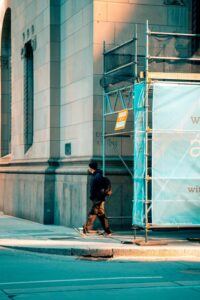 Several factors contribute to such New York construction site accidents:
- Vertical construction: Skyscrapers and high-rise buildings dominate New York City’s skyline, necessitating extensive vertical construction. Working at heights inherently increases the risk of objects falling to the ground below.
- Unsecured materials: Failure to properly secure materials and equipment poses a significant hazard. Loose objects can easily become dislodged due to wind, vibration, or human error, plummeting to lower levels or onto adjacent streets and sidewalks.
- Human error: Inadequate training, complacency, and negligence (carelessness) among workers can lead to accidents involving falling objects. Improper handling, careless storage, and failure to utilize safety measures heightens the risk.
- Overhead work: Activities such as demolition, crane operations, and structural assembly often involve overhead work, increasing the likelihood of objects falling below.
Laws, Regulations and Guidelines
There are a number of laws, regulations and guidelines that exist to help prevent such accidents:
- Occupational Safety and Health Administration (OSHA): OSHA mandates the implementation of comprehensive safety protocols at construction sites, including provisions specifically addressing falling objects. Employers are required to provide adequate training, personal protective equipment (PPE), and fall protection systems to workers.
- New York City Building Code: The city’s building code includes provisions for safeguarding against falling objects during construction and demolition activities. Compliance with these regulations is essential for obtaining permits and ensuring the structural integrity of buildings.
- Local ordinances: Additionally, local ordinances may impose additional requirements and restrictions on construction practices within specific jurisdictions. Municipal authorities collaborate with regulatory agencies to enforce compliance and address safety concerns proactively.
Safety Measures Can Help
Implementing effective safety measures is paramount to prevent accidents involving falling objects:
- Tool tethering: Utilizing tool tethering systems prevents handheld tools from falling when working at height. Tethers securely attach tools to workers’ belts or harnesses, minimizing the risk of accidental drops.
- Debris netting: Erecting debris netting around construction sites provides a protective barrier against falling objects. These nets intercept debris and mitigate the potential for injuries to workers and pedestrians below.
- Guardrails and toe boards: Installing guardrails and toe boards along edges and openings prevents objects from inadvertently falling to lower levels. These barriers serve as vital safeguards, enhancing the overall safety of elevated work areas.
- Safety net systems: Deploying safety net systems beneath work areas effectively captures falling objects, mitigating the risk of injuries and property damage. These nets are engineered to withstand significant impact forces, providing reliable protection for workers and bystanders.
- Regular inspections: Conducting routine inspections of tools, equipment, and structural components is essential to identify potential hazards promptly. Inspectors should assess the integrity of safety measures and have site contractors promptly address any deficiencies to maintain a safe working environment.
Compensation for Injured Workers
Injured workers may be eligible to receive workers’ compensation benefits, which covers medical expenses and a portion of lost wages. In addition, workers may also be able to file a third-party claim against a negligent (careless) party other than the employer or co-employees for significant monetary damages and have two sources of compensation available for their losses.
Examples of third parties include, but are not limited to, general contractors, crane operator, construction companies, sub-contractors, building owners, managing agents etc. In cases where a worker dies from injuries suffered on the job, surviving family members may seek death benefits through workers’ compensation and/or file a wrongful death claim against a third party who may be held liable for the fatal incident.
Contacting an Experienced Lawyer
If you or a loved one has been injured in a construction accident, the experienced New York personal injury attorneys at the Law Offices of Kenneth A. Wilhelm can help you better understand your legal rights and options, and also fight hard to recover just compensation for you. For over 53 years, our skilled accident attorneys have established a proven track record of helping injured victims get fair compensation for their losses.
Our law firm recovered $3,375,576 for a construction worker (an undocumented immigrant) who was injured on the job — one of the highest construction case settlements in New York that year. Our law firm also recovered $3,000,000 for a man who fell and suffered two broken legs when he walked into an open elevator shaft. Also, one of our clients obtained a verdict for $43,940,000 and another of our clients got a verdict for $23,500,000, both in medical malpractice cases.
Please contact us TOLL FREE 24 hours a day, 7 days a week at 1-800-WORK-4-YOU (1-800-967-5496). WE CAN EVEN COME TO YOU. There is no attorneys’ fee unless we recover money for you. We can also help with personal injury, lead poisoning and medical malpractice cases including, brachial plexus palsy (Erb’s palsy) and cerebral palsy cases in New York, New Jersey, Connecticut, Pennsylvania, or Florida. If you have been seriously injured in any of the 50 U.S. states, please call us and we will try to help you with your case.
Other TOLL FREE phone numbers for us are:
1-800-RADIO-LAW, 1-888-WYPADEK, OR 1-800-LAS-LEYES
Please visit us at: www.WORK4YOULAW.com