












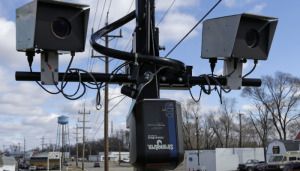
 A camera program that is intended to assist with the crack down on speeding drivers in work zones will remain in New York and will also extend to bridges and tunnels across the state, under a proposal introduced by Gov. Kathy Hochul. According to news reports, the Automated Work Zone Speed Enforcement Program is set to become permanent and expand to include Metropolitan Transportation Authority (MTA) bridges and tunnels in New York City as well as Bridge Authority properties further north such as the Bear Mountain and Newburgh-Beacon bridges.
Fatalities Amid Serious Speed Violations
This announcement from Gov. Hochul follows the recent deaths of two Thruway Authority workers. In November, state Thruway Authority worker Stephen C. Ebling, 58, was killed when he was hit by a vehicle that had crossed over hazard markings along Interstate 90 in Chautauqua County. Ebling was standing in front of his maintenance vehicle when he was struck. In New York, drivers face double fines for speeding in a construction work zone. In May, Thruway Authority worker Vincent J. Giammarva, 62, was killed after being hit by a tractor-trailer while on the job in Chili in Monroe County. His co-worker was seriously injured.
The pilot speed enforcement program began in May 2023. Vehicle speeds are tracked by radar deployed in construction zones. Just last year, the Department of Transportation issued nearly 170,000 work zone violations. Also, 28 vehicles were caught going over 100 mph, including one at 118 mph on the Long Island Expressway. DOT officials said 100 vehicles were going 40 mph over the speed limit. The Thruway Authority has issued more than 130,000 violations and collected $5.5 million in fines since the program began in May 2023.
Dangers Faced by Thruway Construction Workers in New York
The speeding cameras add an extra layer of protection for New York’s Thruway workers who continue to face significant dangers on the job. Workers are exposed to high-speed traffic, distracted drivers and adverse weather conditions while performing essential duties such as road repairs, inspections and debris removal. Injuries and fatalities involving these workers have emphasized the need for stronger enforcement and public awareness of traffic safety laws.
The “Move Over Law” in New York was enacted to address these dangers and protect roadside workers. Originally implemented in 2011, it required drivers to move over or slow down when approaching emergency vehicles with flashing lights. The law has since been expanded to include a broader range of roadside personnel such as maintenance workers, tow truck operators and construction crews. Despite these measures, compliance remains a challenge, as many drivers fail to alter their behavior.
To combat this, New York State has intensified public education campaigns to highlight the importance of the Move Over Law. The law mandates that drivers on multi-lane roads shift to an adjacent lane whenever safe or reduce their speed significantly on single-lane roads when passing stopped vehicles with flashing lights. Violators face steep fines and points on their driving records. Advocacy groups and state officials have continued to push for more stringent penalties and technology based solutions such as these automated speed cameras to improve compliance.
Compensation for Injured Workers
An injured worker in New York City may be entitled to workers’ compensation benefits, regardless of who was at fault for the accident. Workers’ compensation provides medical treatment, some wage replacement, and other benefits to employees who suffer work-related injuries or illnesses. In addition, workers may also be able to file a third-party claim against a negligent (careless) party other than the employer or co-employees for significant monetary damages and have two sources of compensation available for their losses.
Examples of third parties include, but are not limited to, general contractors, construction companies, sub-contractors, building owners, managing agents etc. In cases where a worker dies from injuries suffered on the job, surviving family members may seek death benefits through workers’ compensation and/or file a wrongful death claim against a third party who may be held liable for the fatal incident.
Contacting an Experienced Lawyer
If you or a loved one has been injured in a struck-by accident in a work zone or any type of construction accident, the experienced New York personal injury attorneys at the Law Offices of Kenneth A. Wilhelm can help you better understand your legal rights and options, and also fight hard to recover just compensation for you. For over 53 years, our skilled accident attorneys have established a proven track record of helping injured victims get fair compensation for their losses.
Our law firm recovered $3,375,576 for a construction worker (an undocumented immigrant) who was injured on the job — one of the highest construction case settlements in New York that year. Our law firm also recovered $3,000,000 for a man who fell and suffered two broken legs when he walked into an open elevator shaft. Also, one of our clients obtained a verdict for $43,940,000 and another of our clients got a verdict for $23,500,000, both in medical malpractice cases.
Please contact us TOLL FREE 24 hours a day, 7 days a week at 1-800-WORK-4-YOU (1-800-967-5496). WE CAN EVEN COME TO YOU. There is no attorneys’ fee unless we recover money for you. We can also help with personal injury, lead poisoning and medical malpractice cases including, brachial plexus palsy (Erb’s palsy) and cerebral palsy cases in New York, New Jersey, Connecticut, Pennsylvania, or Florida. If you have been seriously injured in any of the 50 U.S. states, please call us and we will try to help you with your case.
Other TOLL FREE phone numbers for us are:
1-800-RADIO-LAW, 1-888-WYPADEK, OR 1-800-LAS-LEYES
Please visit us at: www.WORK4YOULAW.com
Source: https://www.lohud.com/story/news/ny-news/2025/01/14/ny-thruway-speed-cameras-in-work-zones-could-become-permanent-what-to-know-how-they-work/77697621007/