












 New York’s Scaffold Law, officially known as Labor Law 240, has been a subject of much discussion as well as controversy. This law imposes strict liability on property owners/managers and contractors for certain construction-related injuries, particularly those involving falls from heights. However, this law’s content and implications are often misunderstood. Here are the four most frequently asked questions about this important law, which protects the rights of vulnerable workers injured in construction site accidents.
What does New York’s Scaffold Law (Labor Law 240) Cover?
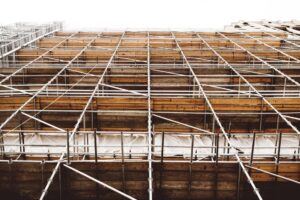
New York’s Scaffold Law is primarily designed to protect construction workers who are involved in tasks performed at elevations. It applies to situations where workers are engaged in activities such as construction, repair, alteration, painting, cleaning, or demolition of buildings or structures. The law mandates that property owners/managers and contractors provide proper safety equipment, including scaffolding, hoists, ladders, and other protective devices, to ensure the safety of workers performing tasks at elevated levels.
Labor Law 240 imposes strict liability on property owners/managers and contractors, which means they can be held responsible for injuries sustained by workers due to inadequate safety measures. This provision is intended to keep property owners/managers and contractors prioritizing safety and take necessary precautions to prevent falls and other accidents.
Who is liable under New York’s Scaffold Law?
Under New York’s Scaffold Law, both property owners/managers and contractors can be held liable for construction-related injuries that occur due to a failure to provide adequate safety equipment or maintain a safe work environment. Property owners/managers are generally responsible for ensuring that the premises are safe for workers and that appropriate safety measures are in place.
Contractors, including general contractors and subcontractors, also bear liability for ensuring compliance with safety regulations and providing necessary safety equipment and training to workers. If a worker sustains injuries due to a contractor’s failure to adhere to safety standards or provide adequate protection, the contractor can be held accountable under Labor Law 240. It is important to note that liability under the Scaffold Law is not limited to the property owner/manager or contractor directly supervising the work but can extend to other parties involved in the project who have control over the worksite and safety protocols.
What types of injuries are covered by New York’s Scaffold Law?
New York’s Scaffold Law specifically addresses injuries resulting from falls or falling objects at construction sites. This includes injuries sustained by workers who fall from scaffolds, ladders, elevated platforms, or other elevated surfaces while performing job-related tasks. Additionally, injuries caused by falling debris or objects that are not properly secured or hoisted are also covered under the law.
The law aims to protect construction workers from the serious and often life-threatening injuries that can result from falls from heights, such as traumatic brain injuries, spinal cord injuries, broken bones, and internal injuries. By holding property owners/managers, contractors and other parties accountable for these injuries, the Scaffold Law seeks to promote a safer working environment and prevent accidents that can have devastating consequences for workers and their families.
What compensation are injured workers eligible to receive under New York’s Scaffold Law?
Under New York’s Scaffold Law, injured workers are entitled to compensation for damages (resulting from construction-related injuries, particularly those involving falls from heights) such as medical expenses, rehabilitation costs, lost wages, past and future pain and suffering, etc. Unlike traditional negligence (carelessness) cases, where the injured party must prove the defendant’s negligence (carelessness), the Scaffold Law imposes strict liability on property owners/managers and contractors for failing to provide adequate safety equipment or maintain a safe work environment. As a result, injured workers can seek compensation without having to demonstrate fault on the part of the property owner or contractor. This provision ensures that injured workers receive the financial support they need to recover from their injuries and move forward with their lives.
Contacting an Experienced Lawyer
If you or a loved one has been injured in a construction accident, the experienced personal injury attorneys at the Law Offices of Kenneth A. Wilhelm can help you better understand your legal rights and options, and also fight hard to recover just compensation for you. For over 53 years, our skilled accident attorneys have established a proven track record of helping injured victims get fair compensation for their losses.
Our law firm recovered $3,375,576 for a construction worker (an undocumented immigrant) who was injured on the job — one of the highest construction case settlements in New York that year. Our law firm also recovered $3,000,000 for a man who fell and suffered two broken legs when he walked into an open elevator shaft. Also, one of our clients obtained a verdict for $43,940,000 and another of our clients got a verdict for $23,500,000, both in medical malpractice cases.
Please contact us TOLL FREE 24 hours a day, 7 days a week at 1-800-WORK-4-YOU (1-800-967-5496). WE CAN EVEN COME TO YOU. There is no attorneys’ fee unless we recover money for you. We can also help with personal injury, lead poisoning and medical malpractice cases including, brachial plexus palsy (Erb’s palsy) and cerebral palsy cases in New York, New Jersey, Connecticut, Pennsylvania, or Florida. If you have been seriously injured in any of the 50 U.S. states, please call us and we will try to help you with your case.
Other TOLL FREE phone numbers for us are:
1-800-RADIO-LAW, 1-888-WYPADEK, OR 1-800-LAS-LEYES
Please visit us at: www.WORK4YOULAW.com