












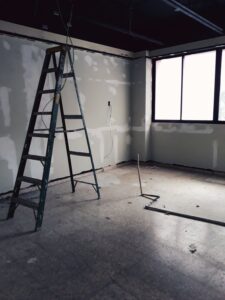
Construction jobs are among the most dangerous in New York City, with workers regularly exposed to heights, hazardous materials and heavy equipment. Among the most common and often preventable accidents are those involving ladders. Falls from ladders can lead to serious injuries such as broken bones, traumatic brain injuries, spinal cord damage and even death. However, New York State has some of the strongest labor laws in the country to protect construction workers who are injured in ladder accidents. These laws impose strict safety obligations on property owners/managers and contractors, offering injured workers powerful legal remedies.
Understanding Labor Law 240: The “Scaffold Law”
Many construction workers including window washers, roofers, ironworkers, steelworkers, laborers, carpenters, masons, bricklayers, painters, and electricians etc. carry out their tasks at elevations while on scaffolds, ladders, platforms, etc. Such jobs are often physically demanding and expose the workers to various perils.
New York Labor Law § 240, commonly known as the “Scaffold Law,” is the central legal protection for construction workers injured in ladder accidents or other construction accidents that involve falling from heights. This law requires that proper safety devices — including ladders, scaffolds, hoists, pulleys and harnesses — be provided and properly maintained for workers involved in tasks such as building, repairing, painting, cleaning or demolishing structures.
Under this law, if a worker falls from a ladder or is struck by a falling object due to inadequate safety measures, the property owner/manager or general contractor can be held strictly liable. This means that the worker does not need to prove negligence (carelessness), but only that the law was violated and the failure caused the injury. This legal framework shifts the burden from the injured worker to those responsible for maintaining a safe work environment.
Strict Liability: A Key Advantage for Injured Workers
One of the unique aspects of Labor Law 240 is that it imposes strict liability on owners/managers and contractors. In other words, if a ladder was defective, improperly secured or otherwise failed to provide adequate protection and that failure resulted in injury, the responsible parties are automatically liable.
For example, if a worker falls from a ladder because it was not secured at the base or because it was the wrong type of ladder for the job, that worker may have a valid claim under Labor Law 240 — even if no one directly witnessed the accident. The law recognizes that working at heights carries inherent risks and places the responsibility for safety squarely on those overseeing the job.
This strict liability standard is especially important for undocumented workers or those who fear retaliation for reporting unsafe conditions. Labor Law 240 does not distinguish between immigration status or union membership. It applies equally to all construction workers on qualifying job sites.
Common Causes of Ladder Accidents on Construction Sites
Ladder accidents are often the result of poor planning, inadequate safety training, or substandard equipment. Common contributing factors include:
• Defective ladders: Cracks, missing steps or faulty locking mechanisms.
• Unsecured ladders: Ladders not anchored properly or placed on uneven ground.
• Lack of fall protection: Absence of harnesses or guardrails when required.
• Failure to inspect equipment: Ladders that are not routinely checked for damage or stability.
Workers’ Compensation Versus Third-Party Claims
Many injured construction workers initially file a workers’ compensation claim, which covers medical bills and a portion of lost wages. However, workers’ compensation benefits are limited and do not include damages for pain and suffering or long-term disabilities.
Labor Law claims, on the other hand, are third-party personal injury lawsuits. These are typically filed against a property owner/manager, general contractor or another responsible party — and not against the injured worker’s direct employer or co-employees. These claims can result in much higher compensation, including coverage for:
• Full lost wages and future earning potential
• Pain and suffering
• Loss of quality of life
• Permanent disability
• Medical expenses beyond those covered by workers’ comp
A knowledgeable construction accident attorney can help determine whether both a workers’ compensation claim and a third-party lawsuit can be pursued simultaneously.
Contacting an Experienced Lawyer
If you have suffered injuries in a construction-related accident, the experienced New York personal injury attorneys at the Law Offices of Kenneth A. Wilhelm can help you better understand your legal rights and options, and also fight hard to recover just compensation for you.
Our law firm recovered $3,375,576 for a construction worker (an undocumented immigrant) who was injured on the job — one of the highest construction case settlements in New York that year. Our law firm also recovered $3,000,000 for a man who fell and suffered two broken legs when he walked into an open elevator shaft. Also, one of our clients obtained a verdict for $43,940,000 and another of our clients got a verdict for $23,500,000, both in medical malpractice cases.
Please contact us TOLL FREE 24 hours a day, 7 days a week at 1-800-WORK-4-YOU (1-800-967-5496). WE CAN EVEN COME TO YOU. There is no attorneys‘ fee unless we recover money for you. We can also help with personal injury, lead poisoning and medical malpractice cases including, brachial plexus palsy (Erb’s palsy) and cerebral palsy cases in New York, New Jersey, Connecticut, Pennsylvania, or Florida. If you have been seriously injured in any of the 50 U.S. states, please call us and we will try to help you with your case.
Other TOLL FREE phone numbers for us are:
1-800-RADIO-LAW, 1-888-WYPADEK, OR 1-800-LAS-LEYES
Please visit us at: www.WORK4YOULAW.com