













Scaffolding is an essential part of most construction activity and projects, providing workers with a safe and stable platform to perform tasks at elevated heights. However, despite its crucial role, scaffolding accidents are a leading cause of injuries and fatalities on construction sites. According to the Occupational Safety and Health Administration (OSHA), approximately 65% of construction workers frequently use scaffolds, making safety measures to prevent scaffolding accidents a top priority. This article outlines five strategies to reduce scaffolding accidents at construction sites and ensure a safer environment for workers.
1. Proper Training and Certification
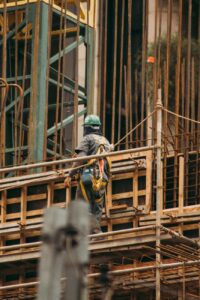 One of the most critical requirements for reducing scaffolding accidents is to ensure that all workers at the site are adequately trained and certified. OSHA requires that workers who use scaffolding receive proper training on the risks as well as the specific procedures for its safe use. Training should cover the following areas:
- Scaffold assembly and disassembly: Workers should be trained in the correct methods for assembling and disassembling scaffolds, including understanding the load capacities, bracing requirements, and securing methods.
- Recognizing hazards: Training should help workers identify potential hazards, such as unstable ground conditions, overloaded scaffolds, and weather-related risks like high winds or ice.
- Proper use of Personal Protective Equipment (PPE): Workers should be trained in the correct use of PPE, including harnesses, helmets, non-slip footwear, and guard rails, which are essential for preventing falls and injuries.
Regular refresher courses and certification renewals should be mandatory to ensure that workers remain knowledgeable about the latest safety standards and practices.
2. Regular Inspections and Maintenance
Routine inspections and maintenance of scaffolding are vital to ensure structural integrity and safety. Before each use, a competent person — defined by OSHA as someone capable of identifying hazards and authorized to take corrective measures — should inspect the scaffold for defects, damage, or any signs of wear and tear.
Key points of inspection include:
- Structural components: Check for any cracks, bends, or deformities in the scaffold’s metal components, such as frames, braces, and posts. Ensure that all connections are secure and that no parts are missing.
- Planking and platforms: Inspect planks and platforms for cracks, splits, or other damage that could compromise their strength. Ensure that they are properly secured and not overloaded.
- Guardrails and toeboards: Verify that guardrails and toeboards are installed correctly and are in good condition. These components are crucial for preventing falls and protecting workers from falling debris.
If any issues are identified during the inspection, they should be addressed immediately, and the scaffold should not be used until it is safe.
3. Use of Appropriate Scaffolding Systems
Choosing the right type of scaffold for the specific construction task is essential in preventing accidents. There are several types of scaffolding systems, each designed for different applications:
- Supported scaffolds: These are the most common type, consisting of one or more platforms supported by rigid, load-bearing members. They are suitable for a wide range of tasks, from general construction to painting and plastering.
- Suspended scaffolds: These scaffolds are suspended from an overhead structure and are typically used for tasks such as window washing or exterior painting of high-rise buildings. They require special attention to anchoring and load distribution to prevent collapse.
- Mobile scaffolds: Also known as rolling scaffolds, these are supported scaffolds that can be moved horizontally. They are useful for tasks that require frequent repositioning, such as drywall installation or ceiling work. Workers should ensure that the wheels are locked when the scaffold is in use to prevent unintended movement.
4. Implementing Fall Protection Measures
Falls from scaffolding are one of the leading causes of fatalities at construction sites. Implementing fall protection measures is critical to prevent accidents. These measures include:
- Guardrails: OSHA requires guardrails to be installed on all open sides and ends of scaffolds that are more than 10 feet above the ground. Guardrails should be capable of withstanding a force of at least 200 pounds applied in any direction.
- Personal Fall Arrest Systems (PFAS): Workers on scaffolds higher than 10 feet should wear a harness connected to a lifeline or anchorage point. PFAS should be inspected regularly for wear and tear and should be properly secured to prevent falls.
- Safe access points: Ladders, stair towers, or ramps should be provided to ensure safe access to the scaffold. Workers should never climb on cross braces or other scaffold components to reach higher levels.
5. Adhering to Load Capacities and Proper Material Handling
Overloading scaffolds is a common cause of accidents, leading to collapses and falls. Workers should be trained to adhere to the load capacities specified by the manufacturer and to distribute the weight evenly across the scaffold. It is important to remember that scaffolds are designed to support specific loads, including the weight of workers, tools, and materials. Exceeding these limits can compromise the scaffold’s structural integrity.
Contacting an Experienced Lawyer
A lot of construction activity in New York requires working from a height or elevation. Ironworkers, steelworkers, carpenters, masons, laborers or electricians typically need to use scaffolds, platforms, ladders etc. to carry out their tasks.
If you or a loved one has been injured in a construction accident, the experienced New York personal injury attorneys at the Law Offices of Kenneth A. Wilhelm can help you better understand your legal rights and options. For over 53 years, our skilled accident attorneys have established a proven track record of helping injured victims get fair compensation for their losses. Our law firm recovered $3,375,576 for a construction worker (an undocumented immigrant) who was injured on the job — one of the highest construction case settlements in New York that year. Also, one of our clients obtained a verdict for $43,940,000 and another of our clients got a verdict for $23,500,000, both in medical malpractice cases.
Please contact us TOLL FREE 24 hours a day, 7 days a week at 1-800-WORK-4-YOU (1-800-967-5496). WE CAN EVEN COME TO YOU. There is no attorneys’ fee unless we recover money for you. We can also help with personal injury, lead poisoning and medical malpractice cases including, brachial plexus palsy (Erb’s palsy) and cerebral palsy cases in New York, New Jersey, Connecticut, Pennsylvania, or Florida. If you have been seriously injured in any of the 50 U.S. states, please call us and we will try to help you with your case.
Other TOLL FREE phone numbers for us are:
1-800-RADIO-LAW, 1-888-WYPADEK, OR 1-800-LAS-LEYES
Please visit us at: www.WORK4YOULAW.com